The history of ivory bracelets and their disappearance!
The History of Ivory: From a Symbol of Power to a Symbol of Conservation
Ivory, long considered a precious material, has marked human history through its use in art, rituals, and, of course, jewelry. But behind the brilliance of ivory bracelets and luxury objects lies a complex history, blending cultural traditions, animal exploitation, and ecological awareness.
Ivory and Jewelry in Antiquity: A Symbol of Status and Power
As early as antiquity, ivory was a highly prized material. Roman citizens delighted in using it to make various luxury items, ranging from statuettes to sophisticated jewelry. This intensive trade largely contributed to the disappearance of elephants in North Africa.
In sub-Saharan Africa, particularly in traditional kingdoms, ivory held a central place in culture. For example, in the Kingdom of Benin, only members of the royal family, under the authority of the Oba, could own ivory jewelry from their territory. Among the Igbo, ivory anklets represented high social status, while in Kenya, the Komba sealed their alliances by exchanging ngotho ivory bracelets.
Ivory: A Sacred Ornament, Symbol of Strength and Power
The elephant, the largest land animal, embodies power, authority, and wisdom. Ivory, extracted from its tusks, thus became a symbol of protection for chiefs and kings. Its naturally curved and hollow shape made it easy to craft bracelets, which were particularly prized for their aesthetics and meaning.
The Colonial Era and the Intensive Ivory Trade
At the end of the 19th century, ivory came mainly from the Lado enclave in northeastern Congo. The arrival of European settlers profoundly upset the balance. With the introduction of firearms, elephant poaching intensified dramatically.
Ivory then became a marker of social success in the West, used to make piano keys, billiard balls, combs, and even chess sets. This frantic trade had a catastrophic impact on elephant populations.
A Slaughter: Millions of Elephants Killed
At the beginning of the 20th century, the elephant population on the African continent was estimated to be between 3 and 5 million. Today, only about 415,000 elephants remain. Every year, between 20,000 and 30,000 elephants are still killed illegally for their ivory.
The current distribution is uneven:
-
Southern Africa: about 55% of African elephants,
-
East Africa: 28%,
-
Central Africa: 16%,
-
West Africa: less than 2%, spread across 13 countries.
A Global Awakening
In response to this emergency, the Washington Convention (CITES) was adopted in 1975. This international regulation, now ratified by 183 countries, aims to protect endangered species by strictly regulating their trade.
Toward More Ethical Jewelry
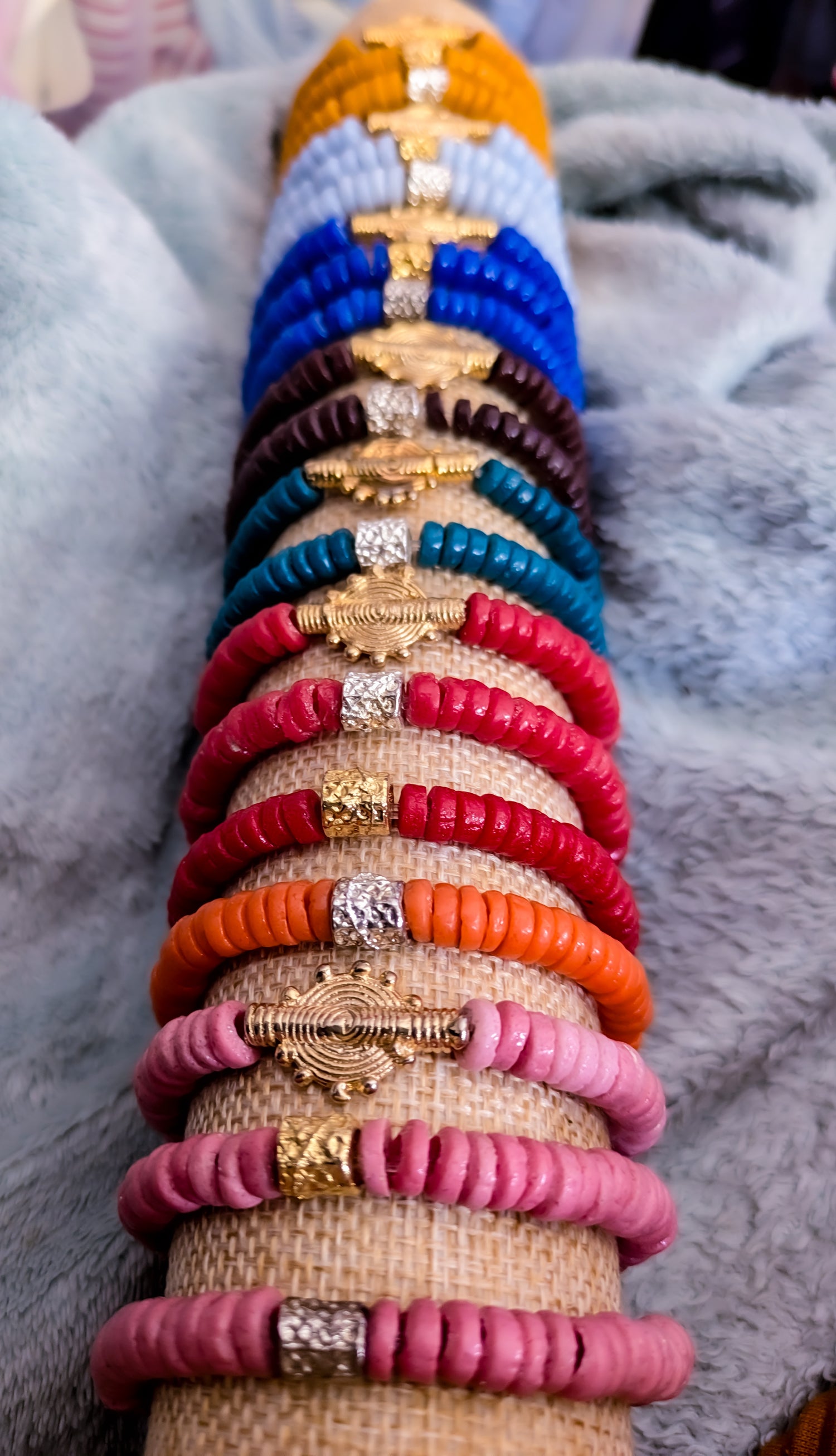
At [Your Jewelry Brand Name], we believe that jewelry should have a story, but also a meaning. That is why we never work with ivory of animal origin, preferring materials that respect flora and fauna. We draw inspiration from the ancestral symbols of ivory—strength, protection, wisdom—to create ethical and sustainable jewelry in harmony with today's values.
Conclusion: Ivory, Between Cultural Heritage and the Duty to Remember
The history of ivory is fascinating, blending African royal traditions with Western excesses. But it also reminds us of our responsibility: to preserve biodiversity, to promote responsible craftsmanship, and to choose jewelry that respects living beings.
At Perles Rares Djonou each piece of jewelry tells a story. But above all, it respects life.